
How to Get Brand Deals and Sponsorships as an Indian YouTuber (2026 Guide)
Learn how Indian creators land lucrative brand deals and sponsorships. From micro-influencers to established channels, discover the exact strategies to attract brands.
Utkarsh Agrawal
6/10/20269 min read
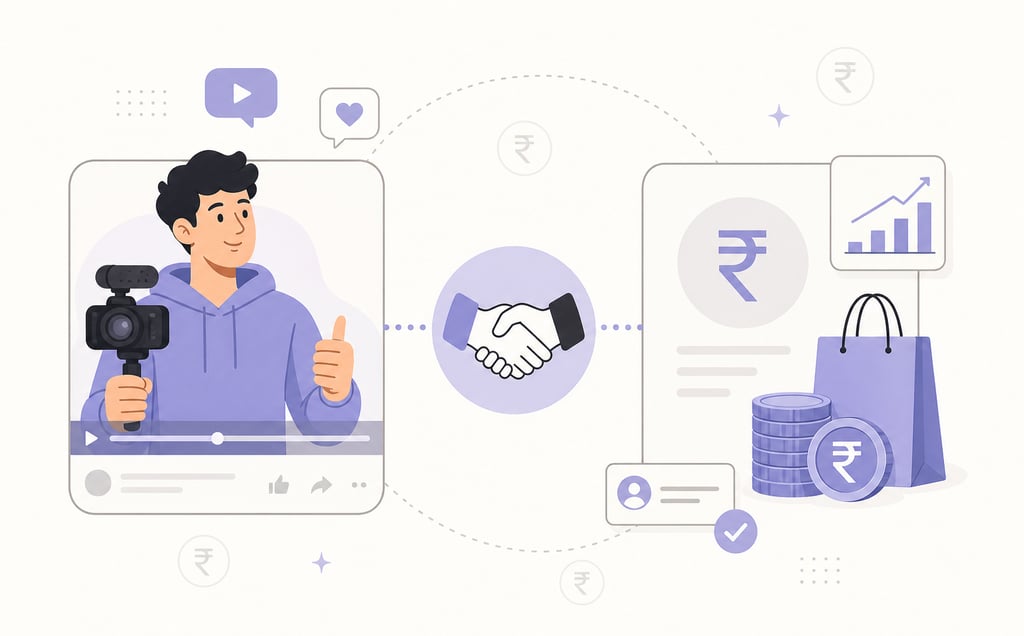
Brand deals are how most Indian YouTubers actually build real income. While YouTube ad revenue pays Rs 2–5 per thousand views on average, a single brand sponsorship can pay 3–10x more. A creator with 100K subscribers might earn Rs 100–300 per month from ads but Rs 50,000–1,00,000 from one brand deal.
The catch? Most creators don't know how to land them. They wait for brands to knock, or they reach out without a strategy and hear nothing back. But there's a playbook-and it works whether you have 10K subscribers or 1 million.
When Are You Ready for Brand Deals? (It's Earlier Than You Think)
You don't need a million subscribers. You don't even need 100K.
Micro-influencers-creators with 10K to 100K subscribers-land brand deals regularly in India. The secret is engagement rate. A channel with 50K subscribers and 8% engagement (every video gets comments, likes, shares) is more valuable to a brand than one with 500K subscribers and 0.5% engagement. Brands pay for influence, not just eyeballs.
The real gatekeepers are these three:
1. Engagement rate - How many viewers interact with your content. Calculate it: (total likes + comments + shares on a video) ÷ (total views) × 100. Aim for 5% or higher. Higher is better.
2. Clear niche - Viewers need to know exactly what your channel is about. A channel about phone unboxing is clearer than one that's "random tech stuff." Clarity helps brands know if your audience matches theirs.
3. Contact email visible - Put an email in your YouTube channel's About section. When a brand wants to work with you, that's how they find you. Without it, they move on to your competitors.
Once you hit 10K subscribers with consistent uploads and visible engagement, you're ready to start pitching. You don't have to wait.
The Types of Brand Deals Available to Indian Creators
Not all brand deals are the same. Each type comes with different pay and different commitment.
Dedicated video - The entire video is about the brand or product. You might spend 3–5 minutes giving an honest review, unboxing, or how-to. Brands usually pay the most for this because it's their entire focus. Payment: typically Rs 50,000–10,00,000+ depending on channel size and engagement.
Integrated segment - You mention the brand for 30–60 seconds during your regular content. It feels natural-like you just decided to recommend the product during your usual video. Brands pay less because it's a brief mention. Payment: typically Rs 10,000–1,50,000 depending on channel size.
Affiliate deal - You get a unique link or coupon code. You earn a commission every time a viewer clicks and buys. No upfront payment, but your earnings scale with sales. Good if the brand offers high commission (15–30%) or if you genuinely believe in the product.
Long-term partnership - You work with one brand across multiple videos over weeks or months. They might sponsor 4–6 videos at a discounted rate per video, but the total is bigger. Examples: a fitness app sponsoring a creator for 3 months, or a FinTech app appearing in monthly videos.
Most Indian brands using YouTube sponsorships: Realme, Poco, iQOO (mobiles); Unacademy, PhysicsWallah, Scaler (EdTech); Groww, Zerodha, Upstox (FinTech); gaming peripherals; Bewakoof, Snitch (clothing); health and supplement brands.
What Brands Look For (It's Not Just Subscriber Count)
Brands have a simple checklist. Hit all of these and they'll come to you.
1. Audience overlap - Does your audience match their target customer? A brand selling coding courses cares more about a 50K tech channel than a 500K fashion channel. They're specific about this. Know who watches your channel: age, location, interests, profession. Pull this from YouTube Analytics → Audience section.
2. Engagement rate - Comments, likes, shares, replies. A video with 10K views and 800 likes (8% engagement) signals real influence. A video with 10K views and 50 likes (0.5% engagement) signals a passive audience. Brands check this first.
3. Audience authenticity - Are your viewers real people? Do they interact genuinely or do you have sudden spikes of bot activity? Brands can smell fake growth. Organic, steady growth is a green flag.
4. Brand safety - Does your channel fit the brand's image? A creator who makes controversial content or gets demonetized frequently is risky. Most brands want predictable, "safe" channels. They'll ask about your channel's demonetization history and content policies.
5. Professionalism - A media kit, a professional email, quick responses. Small things signal you take partnerships seriously.
Building Your Media Kit (What to Include)
A media kit is a 1–2 page PDF that tells brands everything they need to decide. It's your sales document.
What goes in:
Channel name, logo, and niche - Clear and upfront.
Current metrics - Subscribers, average monthly views, average views per video. Be honest; brands can verify this anyway.
Audience demographics - Age range (e.g., 60% aged 18–25), top 5 countries/regions (India will be #1, but where else?), gender split, top interests. Pull this from YouTube Analytics.
Engagement rate - The percentage we talked about earlier. Show the last 30 days of average engagement.
Your niche explanation - A paragraph about what your channel does and who it attracts.
Past brand work - If you've done brand deals before, list 2–3. Include the brand name and say something like "Sponsored video on X, reached 50K views." This builds credibility.
Rate card - Your pricing. Include rates for dedicated videos, integrated segments, and long-term deals. Example:
Dedicated video: Rs 75,000
60-second segment: Rs 40,000
Affiliate partnership: 20% commission
Monthly retainer (3+ videos): Rs 2,00,000/month
Your contact info and social links - Email, WhatsApp (popular in India), Instagram, LinkedIn.
Keep it professional. No clipart or heavy design. Clean fonts, your brand colors, real data. When you send it to a brand, personalize the email: mention why you're reaching out, why you think their product matches your audience, and that you're attaching your media kit.
Finding and Pitching Brands (Outbound Strategy)
Outbound means you pitch first. This works well because you control the timing and the brands you approach.
Step 1 - Find brands that match your niche.
Use these tactics:
Watch videos from similar creators. Who sponsors them? Click the brand links in video descriptions.
Search YouTube: "[your niche] sponsorship" or "[niche] brand deal." You'll see videos with sponsorship mentions.
Check LinkedIn. Search "[brand name] YouTube marketing" or "[brand] marketing manager." Brands post about creator partnerships there.
Visit brand websites. Look for a "partnerships" or "marketing" page. Some brands have creator partnership programs with clear guidelines.
Step 2 - Find the right contact.
Email the brand's marketing team, not general info. LinkedIn is your best bet here:
Search the brand name.
Look for Marketing Manager, Growth Manager, or Partnerships Manager.
Check if they mention creator partnerships or influencer marketing in their bio.
If their LinkedIn profile has an email, great. If not, try the brand's website (look for /careers or /contact) or guess the email format (firstname.lastname@brand.com is common).
Step 3 - Write the pitch.
Keep it short (150–200 words). Example:
Hi [Name],
I run a [niche] channel with [X] subscribers. My audience is [age, location, interests]. I noticed [Brand] aligns well with our community-[reason, e.g., "your phones appeal to content creators and our viewers are mostly tech-savvy creators aged 18-35"].
I'd love to discuss a partnership. I've attached my media kit. My rate for a dedicated review video is Rs [amount]; I'm flexible on integrated segments.
Let me know if you'd like to chat.
Best, [Your name] [Your channel name]
That's it. Attach your media kit. Send it and follow up after a week if you don't hear back.
Expect a 5–10% response rate. That's normal. If you pitch 20 brands, 1–2 will respond. Keep going.
Getting Brands to Come to You (Inbound Strategy)
Inbound means brands find you and pitch first. This is easier, but it only happens when your channel is clearly visible and growing.
1. Optimize your About section - This is the first place brands look. Include:
One clear sentence about what your channel does.
Your contact email (brands use this to reach you).
Links to your media kit (you can host it on your website or Google Drive and link it).
2. Make your email easy to find - Some creators use a landing page: "To work with [Channel Name], email [email] or visit [link to media kit]." This looks professional and speeds up outreach.
3. Signal that you accept partnerships - If you're open to brand deals, say so in your video descriptions, pinned comments, or About section. Example: "Open to brand partnerships in [niche]. Contact: [email]."
4. Get listed on creator platforms - Services like Brandyourself, AspireIQ, CreatorIQ, and GRIN connect creators with brands. Indian platforms include Creator Bazaar and Billo. Listing yourself takes 10 minutes and can bring inbound opportunities.
5. Grow organically and consistently - Brands notice channels that are clearly growing. Consistent uploads, rising engagement, and a clear audience signal professionalism.
Once your channel reaches 50K+ subscribers with visible engagement, you'll start getting inbound pitches. It takes time, but the payoff is that brands come to you.
Negotiating Your Rate (and What to Never Accept)
Your rate card is a starting point, not the final offer.
Negotiation factors:
Usage rights - Can the brand repost your video on their channels or in ads? That's worth more. One-time use (your channel only) is less.
Exclusivity - Can you promote a competitor's product in the next 30 days? Exclusivity periods mean higher pay.
Revisions - How many edits does the brand get? If they ask for 5 revisions, that's more work. Price it in.
Timeline - Rush jobs cost more.
Audience size - A brand might ask for a discount for smaller channels or pay more for larger reach.
What to never accept:
"Exposure" instead of payment - "We'll mention you on our Instagram (2M followers)." Don't fall for it. Exposure doesn't pay rent. Always negotiate cash.
Sketchy products - Turn down brands selling suspicious stuff. It damages your credibility with viewers. Your reputation is your asset.
Contracts with bad terms - Some brands try to own your video permanently or prevent you from mentioning competing products ever again. Read carefully. Ask questions. Walk away if the terms are unfair.
Last-minute changes - If a brand changes the product, the messaging, or the deal 2 days before you film, renegotiate. You're not a vending machine.
Negotiation tips:
Don't accept the first offer. Brands expect back-and-forth.
Justify your price with data: "My last video hit 50K views and my engagement rate is 7%. That's X impressions for your brand."
If they're low-balling, ask questions: "What's your budget range?" "What would make this work for you?" Sometimes they'll go higher.
Keep it friendly. You want a good relationship for future deals.
Disclosure Rules for Indian Creators
Indian law and YouTube both require transparency.
ASCI (Advertising Standards Council of India) guidelines:
Disclose that a video is a paid partnership or sponsored content.
Use hashtags like #ad, #sponsored, #paidpartnership in your video description.
Verbally disclose in the video itself. A simple line like "This video is sponsored by [Brand]" early on is enough.
YouTube's built-in tool:
YouTube has a "Paid Partnership" label. When enabled, it automatically marks your video as sponsored. Use this-it's transparent and professional.
Why disclose?
Viewer trust. If viewers feel misled, they'll stop watching and stop trusting you.
Brand safety. Brands don't want lawsuits. Disclosure protects them.
Legal. ASCI guidelines have enforcement. Non-disclosure can result in complaints and penalties.
Disclosure doesn't hurt your video. Viewers know creators need income. A transparent, honest partnership actually builds trust.
Frequently Asked Questions
How many subscribers do I need to get brand deals on YouTube?
You don't need millions. Micro-influencers with 10K–100K subscribers land regular brand deals in India. What matters more is engagement rate. A channel with 50K subs and 8% engagement rate is more attractive to brands than one with 500K subs and 0.5% engagement. Growing your channel strategically helps both metrics grow together.
What's the difference between inbound and outbound brand deals?
Inbound deals: brands reach out to you because your channel matches their audience. Outbound deals: you pitch to brands that sponsor similar creators. Inbound feels easier but happens only when your channel is clearly growing and your contact email is visible. Outbound requires research and persistence but gives you control over which brands you partner with.
How much can I charge for a YouTube brand deal in India?
Rates vary by subscriber count and engagement. Rough benchmarks: 10K subs = Rs 5,000–20,000 per video; 100K subs = Rs 30,000–1,00,000; 1M subs = Rs 2,00,000–10,00,000. Engagement rate, niche, and video format (dedicated vs integrated segment) all affect price. Never accept the first offer-negotiation is expected.
What should be in my media kit?
Channel overview (name, niche, launch date), current subscriber and view counts, average views per video, audience demographics (age, location, gender from YouTube Analytics), engagement rate, estimated monthly reach, niche focus explanation, past brand work (if any), and your rate card. Keep it to 1–2 pages. A professional media kit signals you're serious about partnerships.
Do I have to disclose paid partnerships on YouTube?
Yes. Indian creators must follow ASCI (Advertising Standards Council of India) guidelines. Add '#ad' or use YouTube's built-in 'Paid Partnership' label in your video description and verbally disclose in the video itself. Non-disclosure can damage your credibility with viewers and brands-it's not worth the risk.
Try YT Verse for Growth and Monetization Strategy
YT Verse specializes in helping Indian creators hit monetization milestones and attract brand deals. Their YouTube SEO and growth strategies are built for Indian creators-they understand the algorithm, the audience, and the niche dynamics that matter.
If you're serious about building a brand-ready channel with strong engagement and clear growth trajectory, YT Verse's 4000 Watch Hours strategy and YouTube algorithm insights are solid starting points. The clearer your growth story, the easier it is to pitch to brands with confidence.